


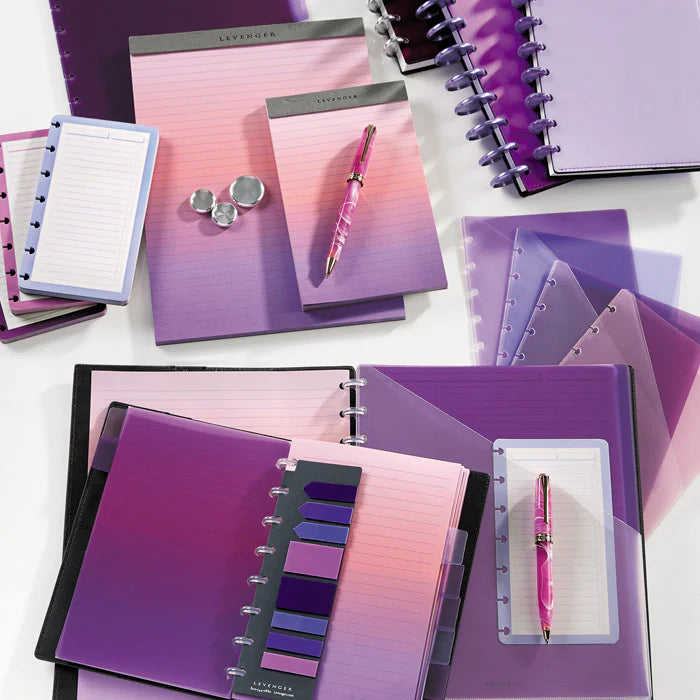
Short, restorative pockets of time—on the train, between meetings, at the gate—are ideal for thinking, planning, and reading without a screen. This guide shows how to assemble an elegant, compact kit that slips into your bag and makes analog breaks easy to start and satisfying to finish.
What is an “Analog Break Pack”?
It’s a lightweight, self-contained set of paper tools and a pen that helps you capture ideas, plan your next steps, read with intention, or simply decompress. The goal is frictionless setup: you open one folio or notebook, and you’re immediately in your chosen mode—thinking, listing, sketching, or journaling.
The 8‑piece core kit (pack light, think clearly)
- A flexible notebook spine: A Circa discbound starter is a versatile foundation because pages add, remove, and rearrange quickly. If you’re beginning, the Circa Discbound Notebook Starter Kit is a practical entry that includes the essentials so you can start writing the moment your break begins.
- Task pads for fast context switches: Slot a set of slim pads to handle quick lists, weekly beats, and checkboxes without flipping through full pages. The Circa Think‑List‑Plan Pad Trio creates three focused lanes—ideation, weekly planning, and actionable to‑dos—so your break produces a concrete next step.
- A folio that “traps and keeps”: If you prefer zipped, everything-in-one carry (including a notepad), the canvas bundle is a strong value. The Canvas Analog Companion Folio Bundle corrals your Circa notebook, Freeleaf pad, pen, and extras in a protective case that opens flat for small‑space work.
- Refined leather option: For a slimmer, boardroom‑ready profile that still carries a notepad and notebook, consider the Luxe Midnight Softolio. Its soft, full‑grain leather folds back for comfortable writing and keeps cards and loose sheets tidy.
- 3×5 index cards: Use one card per thought, decision, or micro‑task. They allow quick wins during a 10‑minute pause and file cleanly when you’re done.
- A pen you trust: Choose a comfortable daily writer you won’t baby. Breaks are short—reliable ink flow matters more than features.
- One planning insert: If your break is when you map the week, carry a dated spine. The leather‑forward 2027 Circa smartPlanner Notebook Bundle brings calendar pages, dividers, larger discs, and a pen together—useful if your breaks often become mini reviews.
- Your personal mode piece: A slim book chapter, a gratitude page, or grid paper for drawing. Technical thinkers may prefer the engineering‑grade grid and solid brass pen in the Circa L‑Tech Engineer Notebook Bundle for precise sketches and structured layouts.
Prefer a playful, low‑pressure start? The color‑rich Circa Simply Irresistible Kit makes it fun to personalize, and pad‑centric note‑takers who like a firm writing surface may enjoy the portability of the Chief Engineer Pad Backer Bundle.
Choose your carry: folio, notebook‑only, or bundle
All three approaches work; the best choice depends on protection, formality, and how often you handle loose items. Use this quick comparison to decide.
Folio and notebook carry options at a glance
| Option | Protection & Organization | Portability | Professional Aesthetic | Best For |
|---|---|---|---|---|
| Canvas Analog Companion Folio Bundle | Zipped case secures notebook, notepad, cards, and pen; easy to grab‑and‑go. | Moderate—roomy but contained; ideal when you commute or travel. | Casual‑refined canvas that suits creative and campus settings. | Travelers and commuters who want everything in one protected place. |
| Luxe Midnight Softolio | Leather folio with pockets and a magnetic closure; pad + notebook access. | Slim and briefcase‑friendly; folds back for tight spaces. | Understated, executive look in full‑grain leather. | Client‑facing roles and formal meetings between sessions. |
| Circa Discbound Notebook Starter Kit (notebook‑only) | Lightest carry; add a few pocket dividers or a band for capture. | High—toss in a tote; minimal footprint on a café table. | Clean, modern notebook profile. | Walkable city days when you value ultralight carry over storage. |
Pack by purpose: mini‑setups you can start in 60 seconds
10‑minute reset (standing line or rideshare)
- Use one index card: write a single question at the top and list three actions that would meaningfully advance it. File the card behind “Next Actions.”
- Capture two gratitude lines or a micro‑journal note on your weekly pad strip from the Think‑List‑Plan trio.
For a routine that anchors the rest of your day’s choices, try the paper‑first approach in Analog Mornings: A 20‑Minute Paper‑First Routine to Set Your Day’s Focus.
Lunch‑hour writing (park bench or café)
- Notebook + pen only. Set a 15‑minute timer, title the page, and free‑write without editing.
- Park one idea per card to expand later; clip them behind your project tab.
Build a lightweight author’s kit with ideas from Lunch‑Hour Writing: A Portable Kit for Journaling and Idea Capture.
Gate‑area planning (TSA‑friendly, small table)
- Folio users: open flat and stage your notepad for scheduling while your Circa holds reference pages.
- Notebook‑only: use a weekly strip from the Think‑List‑Plan trio as a movable dashboard.
See a full travel workflow in Travel Days, Real Work: Planning with a Weekly Pad and Pen Folio at the Gate.
Weekend reset (no laptop, deeper reflection)
- Carry one bound planner spine—such as the 2027 Circa smartPlanner Notebook Bundle—plus a small stack of cards labeled Next Week, Waiting For, and Someday/Maybe.
- Walk, read, and jot. Keep screens off until you’ve captured four concrete priorities.
For a longer, phone‑free retreat, explore Digital Sabbaticals: Packing a Weekend Bag for Offline Clarity or try a habit‑focused pause with Analog Habit Tracking.
- 100 Dot Grid 3 x 5 Cards — Blank cards for the capture half of a break — one idea per card, sorted later.
- Notabandeau — A band that keeps pen, cards and pad together in a tote.
Smart configuration tips
- One page = one outcome: Start each break by titling a fresh page with an action word: Decide, Plan, Draft, or Sketch. It prevents scattered notes.
- Pre‑stage your first move: Leave a sticky flag on the exact line where you’ll pick up next. Your future self opens the folio and starts immediately.
- Use pockets with intention: Cards you still need ride in a front pocket; completed cards move to the back. End of day, file or toss.
- Context dividers: If you juggle workstreams, assign one notebook section per stream and work in bursts—see Context Switching Cure: One Notebook per Workstream with Smart Dividers.
- Analog sprints: Try 25‑minute bursts with a to‑do pad and a single objective; reset with a short walk. Learn the rhythm in Analog Sprinting.
Regional notes for U.S. readers
- Transit: In subway or bus commutes, a junior‑size spine is easier to manage one‑handed while standing. A slim leather folio keeps pages supported when there’s no table.
- Air travel: Pens and paper fly through security; pack scissors or cutting tools in checked bags. A zip folio prevents loose cards from scattering during boarding.
- Outdoor breaks: If you journal in parks or on bleachers, a pad backer or folio with a firm writing surface gives you a stable feel without seeking a table.
Value, deals, and long‑term cost
Levenger tools are made to be refilled and reconfigured, which helps the kit age gracefully rather than getting replaced each season. While some items are premium due to materials and craftsmanship, many bundles and entry kits are more cost‑effective than piecing parts separately, and Levenger routinely offers promotions. If you’re a frequent note‑taker, the loyalty program points you earn on refills and paper add up over time—particularly useful for index cards and seasonal agenda inserts.
Care and restocking checklist
- Weekly: empty pockets, archive finished cards, and pre‑load three fresh blanks.
- Monthly: rotate your task pads; keep one ruled, one checklist, and one weekly pad in the notebook.
- Seasonally: refresh your planner spine or swap in a new refill; color‑code discs or tabs if you like a visual reset.
Restocking without deciding again
3 x 5 Card Sampler Pack (set of 75) — a sampler covers ruled, grid and blank in one pack, which is the whole monthly restock in a single line item.
Frequently Asked Questions
Should I choose a zip folio or a slimmer leather folio?
Choose a zip folio if you carry many loose items (cards, receipts, boarding passes) and want maximum protection while traveling. Choose a slim leather folio if you mainly carry a notebook and pad and prefer a more formal profile that fits easily in a briefcase.
What size notebook works best for short breaks?
Junior size is ideal for standing or tight spaces; letter size gives more room for diagrams and longer drafts. If you’re unsure, start with a flexible base like the Circa Discbound Notebook Starter Kit and test a week in each size before committing to a long‑term configuration.
How do I keep my analog kit from becoming cluttered?
Impose a rule: no more than three active pages and five loose cards in the carry at once. Everything else stays at your desk or in an archive. Use the Think‑List‑Plan strips to move tasks forward without rewriting full pages.
Can I run a complete weekly review from an analog break?
Yes—especially if you carry a dated spine. Use a planner‑centric setup like the 2027 Circa smartPlanner Notebook Bundle and follow a simple flow: capture wins, triage inbox items onto cards, and schedule three high‑leverage actions for the coming week.
Next steps
If you want deeper focus blocks, build a longer session using ideas from Deep Work Without Distractions. For students, a library‑friendly setup is in Campus Detox. And if your day ends with tab overload, convert links to research cards with Reduce Tab Overload. When you’re ready to refresh components, explore curated bundles—or create your own—for a thoughtful fit. Your analog break pack should serve you quietly so your best thinking can speak up.


