
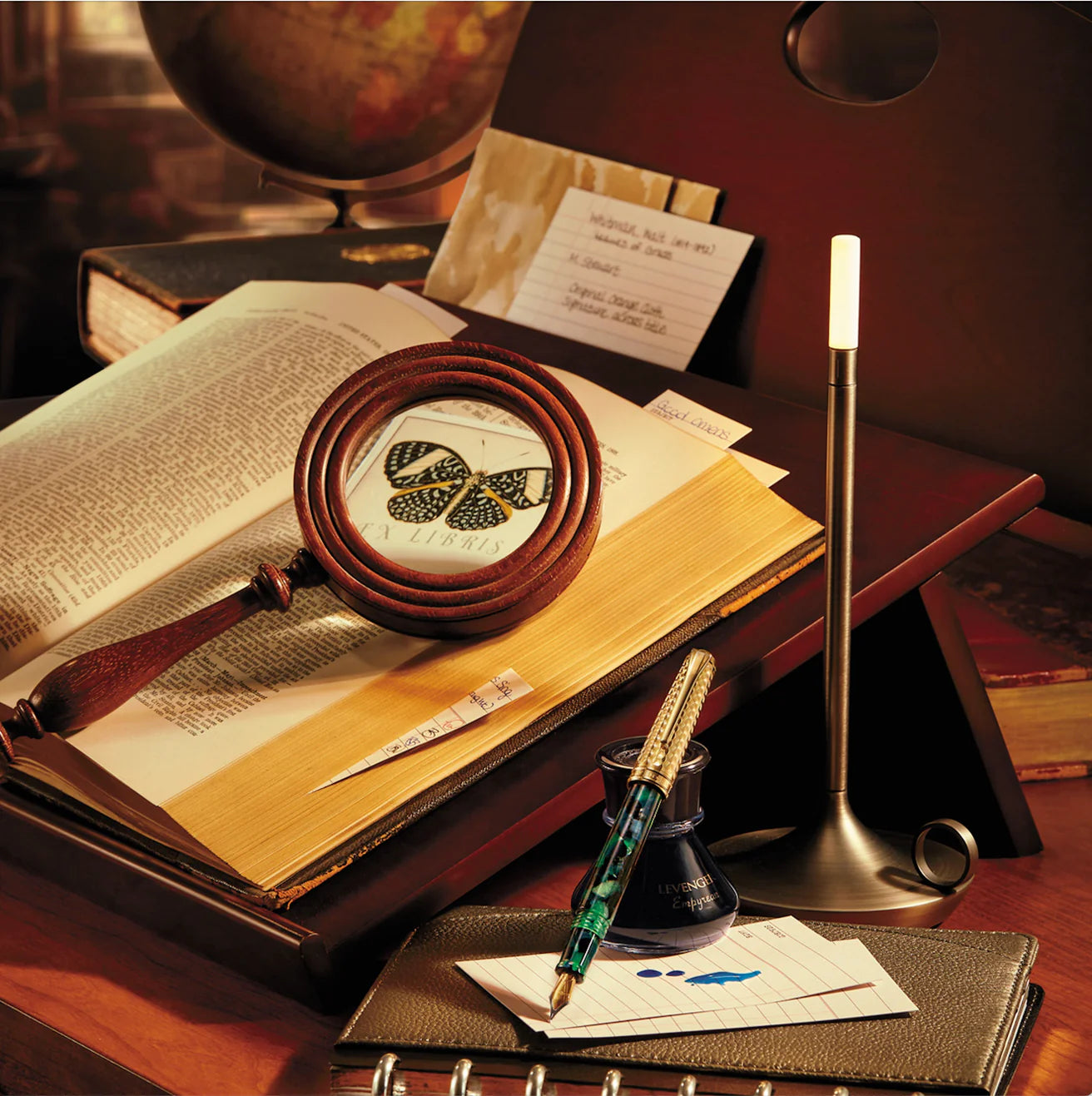
Personalization is part craft and part conversation. At Levenger, it’s how a practical tool becomes a keepsake—how a pen marks a milestone, how a Circa cover signals a work style, and how a leather folio or wallet says “this was chosen for you.” This concierge guide gathers what discerning buyers ask us most: Which finish looks right on which material? How should initials be ordered? What’s a realistic lead time if the gift date is set? How do proofs work for custom Circa covers and stationery? And for corporate buyers, what file types and minimums will keep a logo project on schedule? You’ll find those answers here, presented with the calm, thoughtful tone Levenger customers expect.
We’ll walk through methods like engraving, UV printing, and debossing; placement and etiquette for initials and names; care after personalization; and the practicalities—proofs, lead times, returns, and quality checks. You’ll also see how these decisions play out across core Levenger categories: pens, Circa covers, leather folios, wallets, keepsake boxes, and personalized 3x5 and note cards. When helpful, we’ll reference deeper how‑to guides so you can move from idea to confident order without backtracking or guesswork.
Personalization Methods at a Glance
The right finish respects both the material and the message. Metal calls for permanence and precision; full‑grain leather favors a tactile impression that ages gracefully; translucent or rigid covers invite color. Here’s how the three primary finishes align with common priorities.
| Finish | Works best on | Look & feel | Color options | Strengths & tradeoffs |
|---|---|---|---|---|
| Engraving | Metal pens, clips, and hardware | Crisp, permanent etch; refined and precise | Monochrome (substrate shows through) | Extremely durable on metal; limited to tone‑on‑tone; best for names, initials, dates on metal gifts |
| Debossing | Full‑grain and smooth leather | Subtle depth; tactile impression that patinates with use | Typically tone‑on‑tone; selective items may offer foil | Understated, professional; follows leather grain; foil variants need gentle handling over time |
| UV Printing | Translucent covers and select rigid plastics | Vivid color with clean edges; modern graphic presence | Full color (logo marks and art elements) | Excellent for color logos and icons; ensure readable color contrast on chosen cover hue |
If you’re weighing finishes for a gift or corporate set and want a focused primer before you decide, read Engraving vs. UV Printing vs. Debossing: Which Finish Suits the Gift and Material?. That guide explains how each method behaves day to day and how to match it to both material and message.
Where Personalization Shines Across Levenger Staples
Thoughtful personalization is as much about placement and context as it is about technique. A full‑name engraving on a pen reads differently from small initials debossed on a leather folio. A color logo on a translucent Circa cover sends a different signal than a tone‑on‑tone monogram on a keepsake box. For a quick orientation across core categories, see Where Personalization Shines: Pens, Circa Covers, Leather Folios, Wallets, and Keepsake Boxes. It lays out which items naturally carry a name or initials, which ones excel with a logo, and how placement supports daily use.
As a concise example: pens tend to favor full names for legibility, while wallets and card cases often carry two or three initials in a discreet corner. Circa covers and leather folios can comfortably handle either approach depending on the formality you want. Keepsake boxes allow a centered mark that feels ceremonial, while executive folios favor a quieter lower‑corner placement that looks correct in boardrooms and interviews alike.
Monogram Etiquette and Readability: Getting the Details Right
Initials are timeless, but formats vary. Traditional stationery sometimes rearranges the last initial in the center at a larger size; many modern professional standards keep all initials the same size and in the order first–middle–last for clarity. Levenger’s approach emphasizes legibility and consistency across materials. If you’re deciding between initials and a full name or you’re navigating character limits and symbols, consult Monogram Etiquette and Formats: Initial Order, Full Names, and Character Limits. It explains same‑size initial order, shows examples you can copy, clarifies what punctuation typically prints cleanly, and highlights when to choose a full name instead of three initials.
Two quick rules of thumb serve most buyers well. First, if the surface area is small (pen clip, wallet corner), initials keep things crisp; a full name can feel crowded. Second, if the gift is tied to a specific milestone—a graduation or promotion—a full name engraved on a pen or debossed on a folio nicely marks the moment and stays readable for years.
Circa Covers: Color, UV Print, Debossing, and Smart Proofing
Circa is a modular system, so covers do more than protect paper—they broadcast project identity, team affiliation, or personal style. The choice begins with material: translucent covers invite color via UV printing; leather covers take debossing gracefully for a classic look; and poly sets bring off‑the‑shelf color without permanent printing. The nuances around color contrast, character limits, and the proofing process matter here because Circa covers often carry more than initials—they carry names, lines of text, or full logos. For step‑by‑step guidance on selecting the right cover and preparing a clean, legible design (including how to proof like a pro), rely on Custom Circa Covers: Color Choices, UV Print Options, and Proofing Tips.
A practical tip for visual clarity: choose the cover hue first, then design the mark for contrast. Dark ink or logos read best on translucent frosted or light‑tint covers; lighter elements are crisper against deeper tints. When you expect your cover identity to change with the season or project cycle—say, quarterly planning or rotating client teams—consider a slip‑in approach instead of permanent printing. The Circa Clearview Folio lets you display a printed sheet under a protective sleeve, so you can refresh the look without reprinting the cover itself.
Pens With Purpose: Matching Recipient, Mechanism, and Engraving
Pen gifts succeed when the style suits the recipient’s writing rhythm and the inscription respects the scale. Executives who take rapid notes often prefer a balanced rollerball or ballpoint with a fluid refill; avid journalers might lean toward fountain pens for the tactile feedback. Teachers and professors value durable clips, reliable ink flow, and quick‑read names in congested bags and classrooms. Grads appreciate something that feels like a milestone yet practical for everyday carry.
For a tailor‑made set of recommendations by recipient type—with pairing ideas and ordering tips—read Personalized Pen Gifts by Persona: Executive, Grad, Educator, and Avid Journaler. That guide compares mechanisms and finish choices, then suggests accessories that help a pen stay protected in transit. If your recipient travels often or keeps multiple pens in rotation, a compact case such as the Leather Pen Folio can keep an engraved gift safe in a workbag while looking suitably polished when it’s placed on a conference table.
- True Writer Classic Blue Danube Pen — A flat barrel section takes an engraved name cleanly, and the recipient can change nib or mechanism later.
- Levenger Spirit of 250 Ballpoint Pen — A ballpoint for a recipient who will not maintain a fountain pen — engraved, it still reads as a considered gift.
Leather Folios and Portfolios: Placement, Tone, and Daily Utility
Folio gifts are practical, and they convey readiness—the quiet message that the recipient is prepared to capture ideas and move work forward. Debossed initials on a leather folio embody that message without drawing undue attention. Placement usually lands on the lower right corner of the front cover or, for those who prefer minimal exterior markings, discretely inside. Match the mark to the moment: initials for understated daily use, a full name for a promotion or role change, or selective foil debossing (where available) when you want a celebratory glint.
For a recipient stepping into a broader scope—more meetings, new teams, or travel—choose a format that houses both notes and essentials. A zip‑around style provides security in transit, while a slimmer sleeve‑style folio slides neatly into a satchel. The Bomber Jacket Softolio 2.0 is a good choice for someone who wants a tactile, ready‑for‑anything leather that comfortably takes debossed initials and stands up to daily handling without fuss.
Assembling Gift Sets by Occasion
Many buyers want a coherent set—something that reads as a single thought rather than a loose group of items. The trick is balancing utility, finish, and budget while respecting the timeline. For scenario‑based checklists and quick‑build bundles, use Occasion Playbook: Promotions, New Roles, Anniversaries, and Client Appreciation Sets. It helps you choose items that feel considered, and it notes which finishes and placements tend to communicate the right tone for each moment.
Here are a few ways to think about pairings:
- Promotion: Combine a debossed leather folio for meetings with a compact document carrier for polished handoffs. Add a fine‑point pen engraved with a full name for signature moments.
- New role: A modular Circa notebook for project notes plus a rollerball for everyday writing. A debossed set of initials keeps things quietly professional and immediately useful.
- Work anniversary: Upgrade an existing kit—a higher‑capacity folio to house a favorite notebook, or a keepsake box with discreet initials to anchor a desk. Consider a date engraving inside a pen cap or on a clip.
- Client appreciation: Choose items that travel well and don’t require fit. A small card case with initials or a Circa cover UV‑printed with the client’s team name reads as thoughtful and useful without creating obligations.
If you want the set to feel “ready on day one,” pair a personalized piece with a practical complement that requires no learning curve. For example, if you’re gifting a modular notebook, include a page format the recipient will immediately use—dot grid for sketchers, annotation‑friendly rulings for consultants. The Circa Royal Discbound Notebook Bundle brings a refined colorway that looks tailored in a professional setting and is an easy anchor piece for a thoughtful duo or trio.
- Leather Pen Saddle Duo — Pairs an engraved pen with a desk home, which makes a single pen feel like a set.
- Blackwing Essentials Set with Notebook — A ready-made duo when you need something complete and are not commissioning a mark.
- Circa Royal Discbound Notebook Bundle — A notebook the recipient will refill rather than retire, in a colourway that reads well in an office.
Personalized 3x5 and Note Cards: Fonts, Colors, and Proofs That Read Well
Small formats amplify design choices. On 3x5 cards and note cards, the difference between an elegant layout and a cramped look often comes down to font size, line spacing, and color contrast. If you know your primary use case—thank‑yous, short follow‑ups, or enclosure notes—you can choose a type style and ink color that supports it without guessing. See Personalized 3x5 and Note Cards: Font, Color, and Layout Tips for a Polished Look for layout comparisons, pairing ideas, and a quick decision matrix on vertical vs. horizontal orientations.
Two proofing habits pay off. First, read the text at actual size on your screen or, if possible, print a quick mockup at 100% to check spacing and line breaks. Second, if you’re including a title or credential, shorten long phrases rather than shrinking the font too far—clarity beats completeness on compact formats. When cards will be sent by multiple people (a team or event committee), align on a consistent font and color to keep the set coherent when viewed together.
Corporate and Bulk Orders: Logos, Minimums, and Contact Flow
Corporate gifts work best when they honor the receiving culture—useful, tasteful, and aligned with brand standards. Levenger’s Professional & Corporate Sales team supports logo decoration on a broad range of items, helps with vectorization and scaling, and advises on timelines so your plan lands on the right date rather than hoping it does. For a practical overview—finish options by material, typical minimums, packaging, setup fees, and how to begin—see Corporate & Bulk Orders at Levenger: Logos, Minimums, Contact Flow, and Packaging Options.
Consider starting specifications before you request a quote:
- Artwork: Vector files (AI, EPS, or SVG) reproduce most cleanly. If you only have a high‑resolution raster logo, ask about conversion and line‑weight suitability for the target item and finish.
- Scale and placement: Decide whether the mark should be prominent (front cover of a Circa notebook) or discreet (inside flap of a folio). Subtle placements often feel most gracious in professional gifts.
- Consistency across items: If multiple pieces are being gifted together, choose one branding “voice” that repeats across them—e.g., debossed initials for people + small logo on the outer packaging or on a complementary cover.
- Packaging and addresses: Most Levenger gifts arrive in distinctive boxes; you can plan event staging without extra wrapping. If mailing to individuals, consider a master spreadsheet for clean, on‑time fulfillment.
Corporate orders also benefit from a frank discussion about timelines: the date you need gifts in hand, whether any approvals will occur at the brand or legal level, and which shipping method is appropriate for the destination mix (office vs. home addresses). Even small decisions—ink color in UV printing, or the precise initials format for a set of wallets—go faster when a single point of contact consolidates approvals.
Lead Times, Returns, and Quality Checks
Production timelines involve two clocks: the time to personalize and prepare the order, and the time in transit with the carrier. If your event date is firm, work backward and add a buffer for approvals and delivery variability. Lead Times, Returns, and Quality Checks: How to Order Personalized Items with Confidence explains how to estimate processing windows, how expedited shipping affects the transit stage (not the personalization stage), and what inspection steps to take when the order arrives.
Three timeline practices prevent stress:
- Check the specific product page for the current personalization window. Different items can vary, and seasonal peaks may extend processing.
- Build a 2–3 business day buffer into your backward‑counted schedule to absorb proof approvals, brand team sign‑offs, or a weather‑delayed truck.
- Confirm the recipient’s format in advance for personalized gifts—preferred initials order, nicknames vs. full names, honorifics, or degree abbreviations.
Remember that personalized and monogrammed items are typically final sale once produced. Front‑load your quality checks at the proof stage (for printed or longer text), and review order confirmations to ensure the exact spelling and format are right. When the parcel arrives, open and inspect well before the event date so there’s time to address a shipping or fulfillment anomaly if anything looks off.
Care After Personalization: Keeping Finishes Crisp
Good care starts with knowing what you have. Debossing, foil debossing, engraving, and UV printing each respond differently to daily handling, climate, and cleaning routines. For first‑48‑hour guidance and long‑term maintenance, consult Care After Personalization: Preserving Finishes on Leather and Metal Surfaces. It breaks down simple routines to protect the finish you chose.
Highlights by method:
- Leather debossing (no color): Let the impression settle before heavy conditioning. Wipe with a soft, dry cloth after use; condition sparingly over time, testing products on an inconspicuous area first.
- Foil debossing: Avoid abrasion from zippers or rough textiles; store folios alongside smooth items in a bag to prevent scuffing the foil.
- Engraved metal: The mark won’t peel, but lacquered or plated surrounding areas can scratch; use a clean microfiber cloth for pen barrels and clips.
- UV printing: Treat printed covers as you would a polished, rigid surface—soft‑cloth cleaning only; avoid harsh solvents and extended friction.
Keeping a debossed mark crisp
Leather Honey - Leather Cleaner — debossing sits in the leather's surface, so conditioning the leather is what preserves the mark.
A Practical Decision Matrix for Common Scenarios
Use this compact matrix to align your priority with the finish and item that typically satisfies it with the fewest tradeoffs.
| Your priority | Typical finish | Item type | Suggested inscription | Notable tradeoff |
|---|---|---|---|---|
| Formal milestone gift (promotion or graduation) | Engraving (pen) or debossing (folio) | Metal‑trim pen; leather folio | Full name + year on pen; initials on folio | Pen engraving is monochrome; folio mark is understated by design |
| Team identity visible in meetings | UV printing | Translucent Circa cover | Team name or logo; short line of text | Design must respect color contrast; confirm line weights in proof |
| Daily carry wallet or card case | Debossing | Wallet or card case | Two or three initials | Small surface favors initials over long names |
| Desk presence and ceremony | Debossing (tone‑on‑tone) | Keepsake box | Centered initials or name | Large centered marks draw the eye—choose classic fonts |
| Brand‑aligned client mailers at scale | UV printing (covers) + discreet debossing (leather) | Circa sets; slim folios | Logo or event mark; recipients’ initials | Multiple approvals can extend timelines—plan buffers |
Common Pitfalls—and How to Avoid Them
Even experienced buyers hit avoidable snags. These are the ones we see most often, with simple remedies:
- Too many characters for the surface: Pens and wallet corners reward concise inscriptions. If a full name feels crowded on a pen clip, switch to initials and place the full name on a folio or card.
- Low‑contrast color on translucent covers: Treat the cover hue like a background. If your logo is mid‑gray, pair it with a lighter cover; if it’s pale, choose a deeper tint.
- Skipping the proof stage: For multi‑line text, a proof is insurance. Read it at scale and check punctuation, spacing, and capitalization norms.
- Underestimating lead times near holidays and graduations: Demand bumps are predictable; lock decisions early and reserve a few extra business days for approvals and delivery.
- Unclear initials format across a group order: Decide on a standard (e.g., first–middle–last, same‑size) and share it with your team before the list goes to production.
From Idea to Confident Order: A Step‑by‑Step Path
Here is a concise planning sequence you can reuse for single gifts or scaled programs:
- Clarify the moment and the message: Is it a formal milestone, a practical upgrade, or a quiet thank‑you? Write the inscription as a sentence on paper to hear its rhythm. Then edit it down to what will read well at the intended size.
- Choose the item and finish together: Avoid deciding the inscription before the surface. Pens, leather, and translucent covers reward different approaches.
- Confirm etiquette and limits: Sense‑check character counts and formats with Monogram Etiquette and Formats: Initial Order, Full Names, and Character Limits.
- Proof thoughtfully: For Circa covers and cards, preview at real‑world size. If you’re including a logo, ensure the vector artwork’s line weights will reproduce cleanly at the chosen scale.
- Plan the timeline backward: Use the guidance in Lead Times, Returns, and Quality Checks: How to Order Personalized Items with Confidence, and add a 2–3‑day buffer ahead of the in‑hand date.
- Stage the presentation: Many Levenger items arrive gift‑ready. If you’re assembling a set, arrange items so the inscription is discovered naturally—the folio first, then the pen, then cards or accessories underneath.
- Care on arrival: Follow the simple routines in Care After Personalization: Preserving Finishes on Leather and Metal Surfaces to keep the finish looking new from day one.
Real‑World Scenarios and Solutions
1) The promotion gift with a travel‑heavy calendar
Situation: A manager is stepping into a national role, flying frequently and leading hybrid meetings. Aim for items that are durable, compact, and present well under time pressure. Solution: Debossed initials on a zip‑around folio keep essentials organized and protected; pair that with a rollerball engraved with the full name for contracts and quick notes. If the recipient toggles between multiple projects, slip a fresh ruled pad into the folio and include a small ruled card stack for quick action lists. A practical travel‑friendly option is a pebbled leather organizer; the texture hides scuffs and the zip silhouette keeps loose papers in place. If you prefer a slightly more formal look with the same function, consider the Pebbled Leather Zipped Folio—its structure supports a clean deboss and keeps documents crisp from gate to conference room.
2) A client‑facing team wants coordinated Circa notebooks
Situation: Five consultants present to clients weekly; they want a consistent presence without looking over‑branded. Solution: Choose a translucent cover with a restrained UV‑printed team mark in a high‑contrast color. Keep personal identifiers—like initials—small and optional. For internal cohesion without permanent printing, use the Circa Clearview Folio with a printed insert that can be swapped per client or engagement.
3) Graduation gift for an avid journaler
Situation: The recipient writes nightly and enjoys the tactile experience of putting thoughts on paper. Solution: A fountain‑friendly journal and an engraved pen that balances well in longer sessions, plus a protective sleeve or case for commuting. Keep the inscription concise—initials or a short line with the graduation year—to preserve legibility on a small pen surface. For pairing ideas by recipient type, use Personalized Pen Gifts by Persona: Executive, Grad, Educator, and Avid Journaler.
4) Annual partner appreciation set
Situation: You need twenty tasteful gifts for long‑standing partners; the goal is to show continuity and respect. Solution: Select a leather folio with discreet debossed initials plus a small run of personalized note cards in a restrained font. Present them together in a single package. For format and layout specifics on compact cards, turn to Personalized 3x5 and Note Cards: Font, Color, and Layout Tips for a Polished Look. If your firm also wants a logo presence, keep it inside the folio or on an accompanying Circa cover to maintain a quietly professional tone.
Choosing Fonts, Character Case, and Punctuation That Age Well
Fonts carry personality—and consequences at small sizes. On leather and metal, stick with clean, open letterforms that won’t close up where the stroke narrows. Avoid ornate scripts on tiny surfaces; save them for cards or centered marks on larger items where scale supports flourish. Mixed case tends to read more naturally for full names; all caps can look stately but may require a size reduction that hurts readability on slim pen clips.
Regarding punctuation, compact inscriptions generally favor periods after initials (E.M.B.) only if they remain readable at the chosen size; otherwise, EMB without punctuation is typically cleaner. Ampersands and dashes can look handsome when spacing is generous (e.g., “Avery & Morgan” on a keepsake box), but check how the chosen symbol renders in your selected font—some ampersands are too intricate for small spaces. The guidance in Monogram Etiquette and Formats: Initial Order, Full Names, and Character Limits covers these judgments with examples to copy and adapt.
Scaling Tastefully: Blending Personalization and Brand
Corporate sets don’t need to shout. Many of the most successful programs apply a simple rule: the person first, then the brand. Give each recipient something that recognizes them—a folio with initials, a pen with a full name—and pair it with a single, well‑placed logo mark on an accessory or cover. This balance prevents the gift from feeling like a billboard and makes it more likely to be used daily, which in turn keeps your brand in the right company: meaningful work.
When your brand has strict visual standards, bring those into the conversation early. The team behind Corporate & Bulk Orders at Levenger: Logos, Minimums, Contact Flow, and Packaging Options will help interpret minimum line thickness for engraving or legibility thresholds for UV printing so you don’t discover a constraint at the eleventh hour.
Quality Checks That Respect Craft
Quality checking isn’t just about catching errors; it’s about honoring the craft and intent. For leather, inspect that the debossing follows the grain naturally without distortion. For pens, confirm the engraving is centered, clean‑edged, and spelled exactly as approved. For UV printing, look for consistent color density and crisp edges around tight curves or small counters (the interior spaces of letters like “e” and “a”). The guide Lead Times, Returns, and Quality Checks: How to Order Personalized Items with Confidence includes a pragmatic checklist you can run through in minutes when the order arrives.
Travel, Climate, and Daily Use Considerations
Personalized items live real lives—in backpacks, briefcases, and in transit trays at airport security. A few practical notes extend longevity and preserve the clarity of your mark:
- Commuting and flights: Keep engraved pens in a dedicated sleeve or case to prevent metal‑on‑metal abrasion. Folios travel best if they zip closed or if papers are clipped inside.
- Climate: Dry climates may benefit from occasional light conditioning of leather; very humid climates call for airflow when storing leather overnight. Follow the specific method tips in Care After Personalization: Preserving Finishes on Leather and Metal Surfaces.
- Work surfaces: Rough tabletops can scuff foil over time; use a smooth pad when signing stacks of documents with a foil‑debossed folio beneath your hand.
When to Choose a Non‑Permanent Mark
Sometimes the most flexible “personalization” isn’t permanent. Project‑based teams, rotating client engagements, or seasonal events may prefer a sleeve or insert approach. The Circa Clearview Folio supports this by displaying a printed identity sheet that swaps in seconds. This approach is especially useful when multiple stakeholders must approve logo usage or when teams evolve during the year; you maintain a polished, coordinated presence without restarting the production clock.
When the mark should not be permanent
Circa Canvas Zip Folio — a plain folio carries a printed insert instead of an engraving, which suits rotating teams and changing titles.
Edge Cases and Special Situations
Every so often, a request sits just outside the usual pattern. Perhaps the recipient uses a nickname professionally but would appreciate a formal full name on a keepsake. Maybe a small set of multilingual cards needs diacritics that aren’t available in a given font. Or a wood‑accent item calls for laser marking rather than standard engraving. When you sense the edges of the standard offering, it helps to talk through the specifics—intended use, surface area, visibility, and the hierarchy of what matters most (tone, durability, or color). The cluster of how‑to references included throughout this guide is designed to clarify those tradeoffs before you commit to a path.
Key Takeaways
- Choose material and finish together—engraving for metal precision, debossing for leather tactility, and UV printing for clean color on translucent or rigid covers.
- Default to same‑size initials in first–middle–last order for professional contexts; use full names when the scale supports it or the moment is ceremonial.
- Proof multi‑line designs at actual size; prioritize contrast and open letterforms on compact formats like cards and pen clips.
- Plan timelines by counting back from your in‑hand date and add a modest buffer; expedited shipping shortens transit, not personalization.
- Blend personal and brand marks in corporate gifts—initials or names for people, a restrained logo where it feels at home.
- Protect finishes with simple routines: soft cloths, gentle handling, and mindful storage—especially in the first 48 hours after personalization.
Frequently Asked Questions
How should I decide between initials and a full name?
Match the inscription to the surface and the moment. Small areas (pen clips, wallet corners) usually read best with two or three initials. Larger surfaces (folios, keepsake boxes) can carry a full name without feeling crowded. For formal milestones—promotions, graduations—a full name on the primary gift plus initials on a companion piece strikes a refined balance. If you want examples and character limit guidance by item, see Monogram Etiquette and Formats: Initial Order, Full Names, and Character Limits.
What are realistic timelines for personalized and corporate orders?
Timelines vary by item and season, but you can plan with two clocks: production and transit. Check the product page for the current personalization window, then add shipping time and a 2–3‑business‑day buffer for approvals or delivery variability. For a step‑by‑step planning approach, including how expedited shipping interacts with production time, review Lead Times, Returns, and Quality Checks: How to Order Personalized Items with Confidence.
Which finish should I choose for my material and use case?
Start with the surface: metal prefers engraving for durability; leather takes debossing for a subtle, professional look; translucent Circa covers excel with UV‑printed color. If you want a compact comparison across criteria like look, color options, and tradeoffs, read Engraving vs. UV Printing vs. Debossing: Which Finish Suits the Gift and Material?.
What’s the return policy on personalized items, and how do I avoid mistakes?
Personalized items are typically final sale once produced. The best safeguard is a thorough proof review for printed or longer inscriptions, plus a quick double‑check of names and initials at checkout. When your order arrives, inspect immediately using the simple checklist in Lead Times, Returns, and Quality Checks: How to Order Personalized Items with Confidence. For ongoing care to keep the finish looking sharp, follow Care After Personalization: Preserving Finishes on Leather and Metal Surfaces.
What should I prepare for a corporate logo project?
Gather vector artwork (AI, EPS, or SVG), decide where you want the mark to appear, and align on how prominent it should be relative to the recipient’s name or initials. Share event dates and any internal approval steps up front. For finish choices by material, minimums, packaging, and the contact flow, start with Corporate & Bulk Orders at Levenger: Logos, Minimums, Contact Flow, and Packaging Options.
Closing Thought
The heart of personalization is respect—for the recipient’s work, for the moment you’re marking, and for the materials that will live in their hands every day. When you choose finish and placement with that respect in mind, the result is quietly striking: a tool that feels like it has always belonged, ready to serve the ideas ahead.


