


On the first day of November, 1938, Congress and President Franklin D. Roosevelt worked together to create something of lasting benefit to American readers. Yet few of us know about it, let alone take advantage of it.
Roosevelt’s Proclamation 2309 provided for a subsidized postage rate for books. The purpose, the President wrote, was “the promotion of the cultural growth, education and development of the American people….”
These days, we don’t need the US Postal Service, or any physical delivery service, to send a book to a friend or family member. We can purchase an ebook or a digital audiobook and have it arrive in our loved one’s email box. I don’t belittle this innovation. Digital books you read on your e-reader and audiobooks you listen to on your phone while washing dishes or driving to work are marvelous new options for getting more books into your life.
Yet something rather unexpected has happened in recent years in spite of these technological marvels, or maybe as a result of them. After pundits had just about finished chiseling the epitaph for paper books, these venerable objects rose up to make a comeback via a most unlikely path. Young women are using TikTok (BookTok, they call it) and other social media platforms to extol books in short videos in which they usually show a physical copy of the book and often scenes from inside the bookstore where they discovered the book.
It’s ironic that technology in the form of online shopping via Amazon nearly suffocated bookstores while a bit later, a new round of technology is helping bookstores wriggle free from the python. Those short videos have reminded readers of the physical pleasures of paper books and of buying them in bookstores.
After dwindling to a low point in 2009, the number of independent bookstores has, according to the American Booksellers Association, doubled in the past 10 years. Barnes & Noble, the inspiration for the chain bookstore that was seen to be an existential threat to a smaller independent bookstore in the 1998 movie “You’ve Got Mail,” was itself gasping for breath in the grip of Amazon before it was taken private by an investment fund. Today, the chain is growing again. CEO James Daunt, himself a bookseller, has led the turnaround by championing “career booksellers” who not only know books but also their local customers. Such booksellers are providing informed, helpful service to shoppers in person.
Today, when algorithms bully us like nightclub bouncers and “Do-Not Reply” emails insult us in our own inboxes, is it any wonder that people respond so positively to other people who welcome them and say, “May I help you find something?”
My guess is that our physical reawakening is just getting started, which brings me back to Roosevelt and the subsidized postal rate for books. Books, magazines, and newspapers were seen as a vital part of an educated and informed electorate back in 1938. In the darkness of the Depression, this proclamation provided a hopeful ray of light—our elected leaders were encouraging the dissemination of knowledge that would lead us to better days.
Today, the discount still exists. It used to be called Book Rate and is now known as Media Mail. Just how much of a bargain is it? To send an average hardcover book today from your local post office to any address in the country using Media Mail costs $5.13. It would cost at least twice that without the discount and as much as three times as much to send a regular package of equal weight across the country because for regular packages, distance increases cost. But just as with first-class postage, distance isn’t a factor with Media Mail; it costs $5.13 whether you send your two-pound book across town or across the country.
Put another way, for less than the cost of the average Starbucks latte, we can send a hardcover book across America and into the hands of a loved one.
The magic of being physical
For me, the full benefit isn’t the savings alone but the power we can deliver with a physical book. Unlike ebooks and audiobooks, physical books have heft, substance, and actual presence. And we can leverage that presence when we pen an inscription or include a short note or photo that relates to the book (we shouldn’t be using the book to enclose a letter on topics unrelated to the book; that would be cheating the Post Office, which is never a good thing.)
The Post Office also permits “marks to call attention to words or passages in the text.” So you can add Post-it Notes or (commercial message alert) Levenger Page Nibs, and still keep safely within the rules.
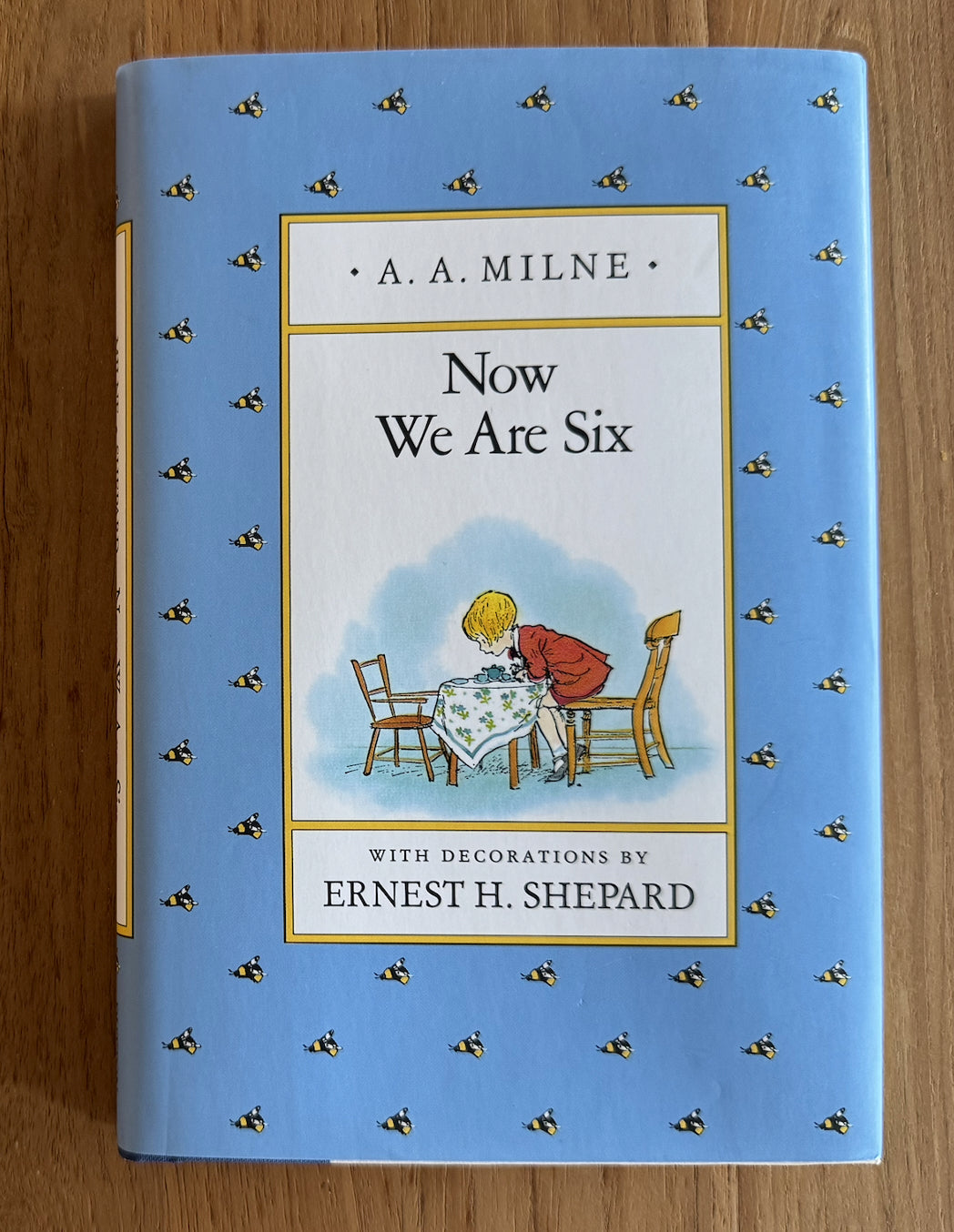
In 1957 my grandfather, a high-school handwriting instructor, inscribed a copy of Now We Are Six to me. While I can’t match my grandfather’s handwriting, I can affix a photo of his inscription next to mine in a new copy of Now We Are Six I’m sending to our own grandson, some 70 years later. I’m going to send it via Media Mail.
If you haven’t done it in a while, I recommend you visit your local bookstore and get to know your booksellers. Buy a book and inscribe it to a friend or family member. Then go to your local US Post Office, say hello to your friendly postal worker, and mail it via Media Mail for a bargain price. It’s not as fast as going digital, but it can deliver to you, and others, something that emails and digital audiobooks can't: genuine human connection that physical books foster when passed from hand to hand.

The new version of Now We Are Six I’m sending to our grandson some 70 years after my grandfather sent a copy to me.

I also affixed a photo of my old copy inside my grandson’s new book.

I can’t match my grandfather’s penmanship, but I can pass on a physical memento. Affixed on the left page is a photo of my granddad’s inscription.

Steve Leveen
Co-Founder
…